Bodybuilding program builder
Build your routine with exercises, sets and reps. See where your sets land across each workout or your whole plan.
How to build your program
3 steps
Choose a starting point
Start with a push, pull or leg workout, or load a push/pull/legs, upper/lower or full-body plan. You can also choose your own exercises.
Set up your workouts
Add up to six workouts. Adjust sets and rep ranges, name each workout and open an exercise for its demo and instructions.
Check coverage and share
Compare the whole plan with an individual workout. Review estimated sets and the direct/indirect breakdown for each muscle, then copy a link to keep or share your plan.
A plan you can start with
Start with your time and equipment.
One useful check
How do I train and progress?
- Start comfortably
- Warm up, then use lighter practice sets before your first demanding lifts. These are not part of your planned working sets.
- Effort
- Choose a weight that leaves about 2–3 good repetitions in reserve. Stop the set when you cannot keep your technique; avoid grinding or forcing painful movements.
- Rest
- Start with about 2–3 minutes between demanding compound sets and 1–2 minutes for smaller isolation exercises. Rest longer when you need it.
- Progress
- Keep the weight until every planned set reaches the top of its rep range with the same control and effort. Next time, try the smallest available increase and return toward the lower end.
- Use the estimate
- Keep your set count steady while reps or load improve and you recover between sessions. If progress stalls across several sessions, first check effort, rest and consistency. Consider a small volume change only after those checks; more sets are not automatically better.
- A difficult week
- One weaker session does not require a new program. Repeat the load. If fatigue keeps building, reduce a set or use a lighter load temporarily.
- Schedule
- Spread sessions across the week with rest between full-body sessions where possible. If you miss one, resume the sequence; do not cram missed sessions together.
These notes are also included in your Excel Guide.
Or browse example routines
Your workout
Nothing yet. Add exercises from the list, or try a preset.
Add exercises
Choose an exercise to replace the selected movement
Exercises
179 exercisesChest · 25
Shoulders · 18
Triceps · 14
Biceps · 15
Forearms · 9
Back · 27
Traps · 6
Abdominals · 11
Obliques · 5
Glutes · 8
Quads · 16
Hamstrings · 6
Adductors · 2
Calves · 8
Cardio · 9
No exercises match.
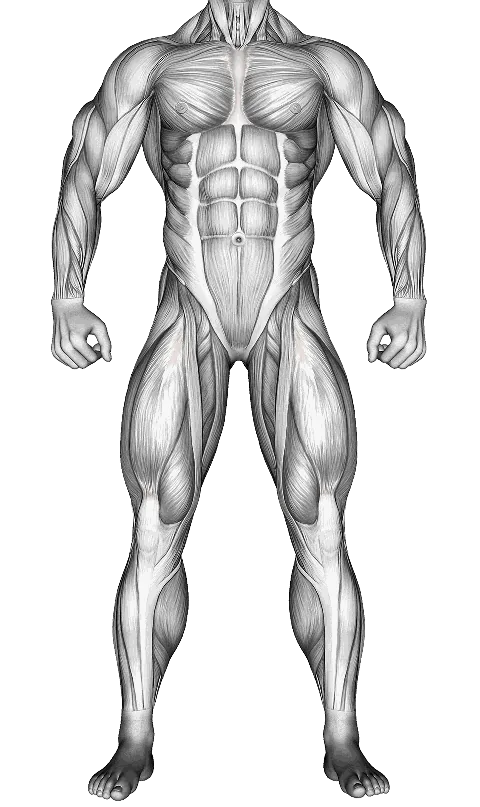
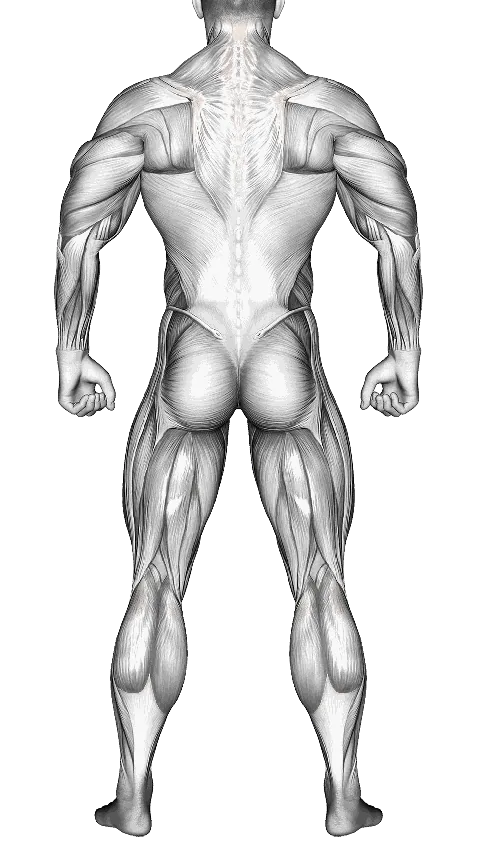
Add exercises to see where your sets land.
Muscle estimate = direct + half of indirect. If you are progressing and recovering well, do not add sets just to raise the number.
- ≤2
- ≤5
- ≤9
- ≤14
- >14
How we count
Estimated muscle sets = direct sets + half of indirect sets. Direct means a main working muscle; indirect means a contributing muscle. Count working sets, not warm-ups. This is a planning estimate, not measured growth or a target to reach. Technique and range of motion affect the contribution. Shading shows the same estimate across a muscle; it does not measure individual muscle heads or activation. Do not add muscles to get workout sets.
Estimated volume by muscle
Your breakdown shows up hereSee estimated working sets for each muscle, with direct and indirect work shown separately. The builder covers these 14 muscle groups:
- Chest Upper Chest (Clavicular), Mid & Lower Chest (Sternocostal)
- Shoulders Front Shoulder, Rear Delts, Mid Shoulder
- Triceps Long Head, Lateral Head, Medial Head
- Biceps Long Head, Short Head, Brachialis
- Forearms Inner Forearm “Flexors”, Outer Forearm “Extensors”
- Back Lats, Lower Back, Upper Back
- Traps Upper Traps, Mid Traps, Lower traps
- Abdominals Upper Abs, Lower Abs
- Obliques External Obliques, Internal Obliques
- Glutes Upper Glutes, Lower Glutes, Gluteus Medius, Gluteus Minimus
- Quads Front Quads, Outer Quads, Inner Quads
- Hamstrings Inner Hamstrings, Outer Hamstrings
- Adductors Inner Thighs
- Calves Medial Head “Inner Calf”, Lateral Head “Outer Calf”
A push-day example: where 15 sets land
Five exercises, three working sets each: 15 actual sets. Muscle estimates count direct sets fully and indirect sets halfway. Muscles overlap, so do not add these rows to get the workout total.
| Exercise | Sets |
|---|---|
| Barbell Bench Press | 3 |
| Dumbbell Seated Shoulder Press | 3 |
| Cable Lateral Raise | 3 |
| Cable Rope Pushdown | 3 |
| Dumbbell Chest Fly | 3 |
| Muscle | Direct | Indirect | Estimated sets |
|---|---|---|---|
| Chest | 6 | 0 | 6 |
| Triceps | 3 | 6 | 6 |
| Shoulders | 6 | 6 | 9 |
An example for exploring the tool, not a complete training prescription. Rep ranges are editable; they do not change these counts.
Open and edit this push workoutProgram builder questions
Does bench press count toward triceps sets?
Yes. Three standard bench-press sets contribute three indirect triceps sets, counted as 1.5 estimated sets. Three pushdown sets contribute three direct triceps sets. Together that is 4.5 estimated triceps sets and six actual exercise sets.
Are direct and indirect sets counted equally?
No. Estimated muscle sets equal direct sets plus half of indirect sets. Both raw counts remain visible. The map uses that estimate, not a growth or recovery score. Warm-up sets do not belong in the working-set count.
Does the whole-plan view show weekly volume?
It counts each listed workout once. Guided plans represent one week. Older links remain one round until you explicitly select One week. Include each session you will perform, including repeats; four-day starters contain four sessions. Calendar days are not assigned.
Does this generate a personalized bodybuilding program?
Help me start creates an editable starting plan for your available days, time and equipment, with an optional lighter start. The training guide explains effort, rest and a simple progression rule. It does not estimate your personal recovery or prescribe exact weights. You can edit and share a plan without joining the app waitlist.
How do I keep or share my plan?
Use Copy link after adding exercises. The link contains your workout names, exercises, sets, rep ranges and any setup choices, so anyone with it can open the plan. Keep a copy of the link; the tool does not save your plan to an account or browser storage.
Learn to read your program
Worked examples and counting conventions to help you interpret the map.
Want a program built around what’s behind?
IronByte shows how every planned set is split across muscle heads, week by week.